


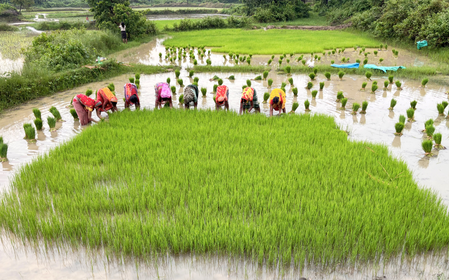
Despite making up nearly half of Pakistan’s population, only one in four working-age women is part of the labor force, in contrast to almost four out of five men, as reported by The News International. Most working women in Pakistan are concentrated in agriculture, with less than 15 percent engaged in formal employment. The industrial sector sees a mere 3.6 percent of women in employment, indicating a significant exclusion of women from industrial development.
The disparity in workforce participation between men and women in Pakistan highlights a concerning trend. While industries in the country are advancing with new technologies and equipment, women are largely left out of these advancements. This exclusion not only raises questions of fairness but also represents a missed economic opportunity, hindering productivity, innovation, and overall competitiveness.
Structural barriers continue to restrict women’s involvement in Pakistan’s industrial workforce. These barriers include limited access to education and technical training, as well as challenges in obtaining finance for women-led businesses. Additionally, workplace environments often lack safety measures, flexibility, childcare facilities, and effective protection against harassment, further impeding women’s participation.
The societal norms in Pakistan play a significant role in limiting women’s economic engagement. Deeply ingrained social norms restrict women’s mobility and discourage economic activities outside the household, leading many women into informal, low-skilled, or home-based work, or even forcing them out of the labor force entirely. Moreover, the unequal distribution of unpaid care work, coupled with broader health and demographic pressures, further restricts women’s ability to acquire skills, pursue formal employment, and sustain their careers over time.
The importance of integrating women into the economy goes beyond just equality; it is crucial for Pakistan’s industrial progress. Failure to fully engage women in the workforce will impede economic growth. Estimates suggest that closing the gender gap in labor force participation could potentially increase Pakistan’s GDP by up to 30 percent, with projections from the World Bank indicating a potential economic gain of $75 to $85 billion. Even a modest 10 percent rise in female workforce participation could contribute an additional 1.5 percentage points to annual growth, emphasizing the significance of inclusivity.
