


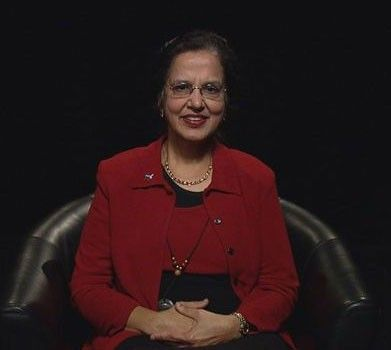
A seven-year-old girl in Lucknow witnessed Sputnik flying across the sky in October 1957. That girl, Hashima Hasan, now plays a crucial role in guiding NASA’s advanced space telescopes like Hubble and James Webb. Hasan’s journey from watching Sputnik to becoming a space scientist is a remarkable tale of determination and success.
Hashima Hasan’s childhood fascination with space led her to pursue a doctorate in theoretical nuclear physics from the University of Oxford. Despite facing challenges as a female scientist, Hasan’s career took her across continents before settling in the United States in 1985. Her pivotal role at the Space Telescope Science Institute involved developing software for NASA’s Hubble Space Telescope.
At NASA, Hasan’s contributions extended to the James Webb Space Telescope, where she led critical technology development and negotiations with international space agencies. Her dedication and resilience were evident during challenging times, such as the aftermath of the September 11 attacks, when she ensured the success of the Mid-InfraRed Instrument on JWST. Hasan’s message to aspiring scientists is to pursue their dreams and persevere in exploring the mysteries of the Universe.
Hashima Hasan’s significant roles at NASA include serving as a program scientist for various missions and as deputy program scientist for JWST.
