


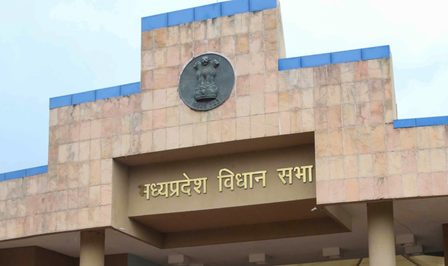
In a significant move, the Madhya Pradesh Legislative Assembly approved the Uniform Civil Code (UCC) Bill 2026 amidst chaos and interruptions. The ruling BJP managed to pass the Bill after intense debates, aiming to establish a unified legal framework in the state. The session was tumultuous, with Congress MLAs protesting and demanding the Bill’s referral to a Select Committee.
Chief Minister Mohan Yadav led the BJP MLAs in supporting the UCC, emphasizing the transition to a single constitution for all citizens. He highlighted broad support for the UCC among Muslim women and men, accusing the opposition of playing divisive politics. The opposition, led by Congress MLA Arif Masood, criticized the Bill, citing concerns about rushing the process and potential impacts on cultural rights.
The debate also saw discussions on OBC reservations, with the opposition advocating for their immediate implementation alongside the UCC. BJP MLAs defended the Bill, emphasizing its alignment with the principle of ‘One Nation, One Law.’ Despite repeated adjournments due to disruptions, the ruling party eventually passed the Bill through a voice vote, heralding it as a historic step towards legal uniformity.
Chief Minister Yadav hailed the passage as a milestone that would promote equality and standardization in personal laws, aligning Madhya Pradesh with states like Goa, Uttarakhand, and Assam in implementing the UCC. The approval of the Bill has sparked division, with the BJP viewing it as a progressive reform while the Congress criticizes it for allegedly targeting specific communities and overlooking OBC reservation issues. The implications of this development on social cohesion and political dynamics in Madhya Pradesh are expected to be profound.
