


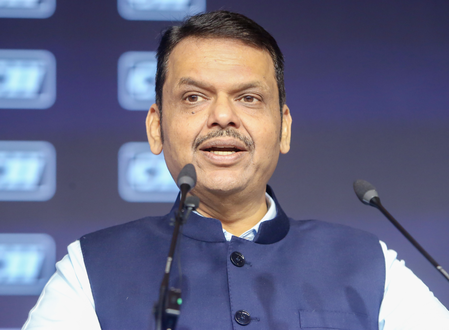
Chief Minister Devendra Fadnavis highlighted Maharashtra’s pivotal role in India’s economic growth, aiming to elevate the state into a $1 trillion economy by 2030. He emphasized the state’s significance in shaping India’s economic future, crucial for the nation’s aspirations of becoming a ‘Viksit Bharat’ by 2047. Fadnavis outlined a strategic roadmap at the CII summit, underlining the state’s transition into a key economic driver.
Fadnavis praised India’s economic stability amidst global uncertainties, crediting the country’s shift from potential to assured delivery to effective central leadership. He stressed the importance of robust infrastructure projects in propelling industrial growth, citing developments like the Mumbai Trans Harbour Link and the upcoming Navi Mumbai International Airport as transformative for regional connectivity.
The Chief Minister underscored the strategic importance of projects like the Samruddhi Mahamarg and the Vadhavan Port in integrating Maharashtra’s regions with global markets. Fadnavis positioned Maharashtra at the forefront of future technologies, highlighting sectors like AI, semiconductors, clean energy, and data centers as key drivers of the state’s economic landscape.
Fadnavis outlined ambitious plans for Gadchiroli to become a hub for Green Steel production by 2032, alongside a focus on high-value sectors like Semiconductors and AI in Pune and Mumbai. He committed to reducing industrial power tariffs annually to enhance Maharashtra’s competitiveness in manufacturing and reaffirmed the state’s leading position in the country’s startup ecosystem.
The Chief Minister proposed a strategic model for Maharashtra, designating Mumbai as the financial hub, Pune for innovation, and Nagpur as the central logistics capital. Fadnavis called upon the private sector to collaborate in realizing Maharashtra’s economic vision, positioning the state as a frontrunner in India’s economic transformation by 2047.
