


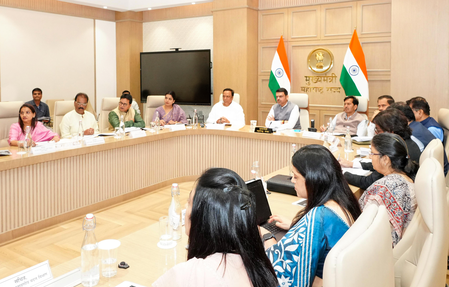
In a move to revive the Brihanmumbai Electric Supply and Transport (BEST) undertaking, Maharashtra Chief Minister Devendra Fadnavis has instructed authorities to develop a comprehensive blueprint. This blueprint will focus on depot development, staff housing, public amenities creation, and long-term financial self-sustainability.
Fadnavis emphasized the importance of transparency and urged all relevant agencies to collaborate closely. The Chief Minister highlighted three core pillars for the BEST blueprint: citizen welfare, employee well-being, and the long-term development of Mumbai city.
During a high-level review meeting chaired by Chief Minister Fadnavis, directives were issued for the modernization of various BEST bus depots. Fadnavis stressed that the responsibility of BEST operations lies not only with a single organization but is a collective duty of Mumbai City, the Municipal Corporation, and the state government.
The modernization of BEST depots will occur in two phases, along with an expansion of the bus fleet. Fadnavis made it clear that BEST-owned land will not be sold but will be developed through a Public-Private Partnership model. The ownership of land and assets will remain with BEST under a long-term lease model.
Plans for depot monetization include integrating museums, sports facilities, cultural centers, and social infrastructure. Fadnavis proposed the idea of dedicated mini-theaters within select depots to showcase Marathi cinema at subsidized rates. Additionally, modern residential complexes will be built to enhance the living standards of BEST employees.
Aligning with the national vision of ‘Viksit Bharat 2047’ and ‘Viksit Maharashtra,’ the Chief Minister instructed officials to draft a 22-year long-term economic plan for BEST. This plan will assess future bus fleet requirements, manpower needs, revenue generation, and expenditure control.
To expedite project implementation, Fadnavis mandated that project approvals, permits, and administrative planning be completed in the preparatory phase. Addressing Mumbai’s parking crisis, he highlighted the importance of creating public parking spaces through depot projects to improve the city’s infrastructure.
In a significant move to decongest Mumbai’s internal roads, Chief Minister Fadnavis directed the transformation of former octroi plazas into multi-modal transport hubs. These hubs, located at the city’s entry points, will include parking lots and facilities for external private buses, aiming to reduce traffic congestion.
Fadnavis also instructed officials to coordinate with the Maharashtra State Road Transport Corporation for intercity government bus operations alignment with the new hub model. He concluded by demanding a strict, time-bound program from all departments to ensure the project’s swift progress from blueprint to reality.
