


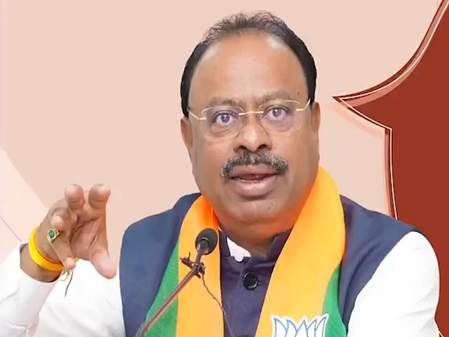
Maharashtra Revenue Minister Chandrashekhar Bawankule expressed confidence in the MahaYuti alliance, comprising BJP, Shiv Sena, and NCP, predicting a vote share exceeding 51% in 29 municipal corporations. He highlighted that this target signifies a mandate for progress and development. Bawankule outlined future development plans for Mumbai up to 2047, emphasizing a vision-driven approach led by Devendra Fadnavis to secure victory based on development agendas rather than identity politics.
Bawankule anticipated that the projected vote share would translate into a substantial two-thirds majority, ensuring that all 29 municipal corporations’ mayors belong to the MahaYuti alliance. He credited the trust garnered by the “Double Engine” government of PM Modi and Deputy CM Fadnavis for these anticipated record-breaking numbers. Bawankule stressed that the alliance’s objective is not just victory but a dominant electoral performance with over 51% public support, aiming for a landslide win in favor of pro-development initiatives.
While targeting the 51% mark, Bawankule clarified the alliance’s strategy in areas where partners are contesting separately. He explained that even in the 24 out of 29 corporations where MahaYuti members are rivals, their combined vote share is expected to surpass 51%, effectively countering the opposition. Bawankule hinted at a post-election unity among the partners at the state level to form local governments and install mayors in line with the MahaYuti framework.
Emphasizing the alliance’s strength, Bawankule contrasted it with the perceived weaknesses of the Maha Vikas Aghadi (MVA). He criticized the MVA for its internal conflicts and alleged lack of a cohesive strategy, suggesting that these factors hinder their ability to challenge the consolidated base of the MahaYuti. Bawankule dismissed the UBT-MNS alliance in Mumbai as emotional politics, asserting that voters would prioritize the BJP’s development-oriented blueprint over sentimental appeals.
