


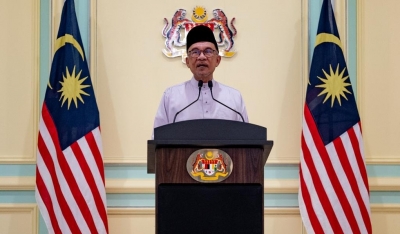
Malaysia recently engaged in phone discussions with various Middle Eastern leaders, advocating for peaceful approaches to alleviate escalating tensions in the region. Malaysian Prime Minister Anwar Ibrahim highlighted that Malaysia’s stance was communicated during separate phone calls with Qatari Prime Minister and Foreign Minister Sheikh Mohammed bin Abdulrahman bin Jassim Al-Thani, United Arab Emirates’ President Sheikh Mohamed bin Zayed Al Nahyan, and Bahraini Crown Prince and Prime Minister Salman bin Hamad Al Khalifa. Discussions revolved around the current situations in Qatar and Bahrain, as well as broader issues in the Middle East post the Iran attacks.
Anwar expressed appreciation for the efforts of Qatar and Bahrain in ensuring the safety of Malaysians in both countries. Emphasizing the importance of prioritizing peaceful approaches and refraining from actions that could endanger regional stability and security, he stressed the need for all parties to exercise restraint. Additionally, Anwar conveyed Malaysia’s sympathy and solidarity with the people of Iran during a phone call with Iranian Foreign Minister Seyed Abbas Araghchi amid challenging times.
Malaysia voiced deep concerns regarding the prolonged conflict’s impact on global peace, stability, and well-being. Despite escalating geopolitical risks in the Middle East, Malaysia’s currency, the ringgit, is expected to maintain its resilience. Analysts predict that the ringgit could outperform regional counterparts due to robust economic fundamentals and strong demand in the technology sector. Maybank Investment Bank highlighted that Malaysia’s status as a net oil importer, coupled with strong fundamentals, current account surplus, fiscal discipline, and political stability, positions the ringgit favorably to withstand the challenging environment.
