


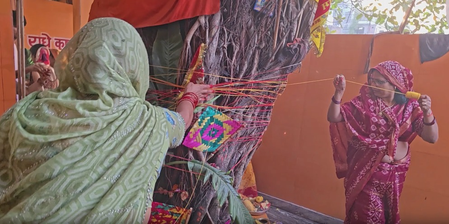
Married Hindu women in various parts of India, such as Delhi, Prayagraj, Haridwar, and Bihar’s Nalanda district, observed Vat Savitri Vrat with traditional rituals to pray for their husbands’ well-being and prosperity. The festival saw gatherings at temples, riverbanks, and banyan trees, where women fasted and performed sacred rituals deeply rooted in Hindu customs.
In Delhi, devotees flocked to the Sri Radha Krishna Temple to offer prayers, light diyas, and engage in worship ceremonies dressed in traditional attire. Similarly, in Prayagraj, millions of devotees gathered at the Triveni Sangam to take a holy dip and worship the banyan tree for their husbands’ health and longevity. Haridwar also witnessed thousands of devotees at Har Ki Pauri, where married women observed fasts and performed rituals around banyan trees.
The festival, celebrated mainly in North India, holds significant spiritual importance as women worship the sacred banyan tree symbolizing longevity and strength. Women wake up early, take a holy bath, wear traditional attire, and offer prayers at temples or banyan trees. The rituals include lighting diyas, tying sacred threads, and seeking blessings before breaking their fast with satvik food.
