


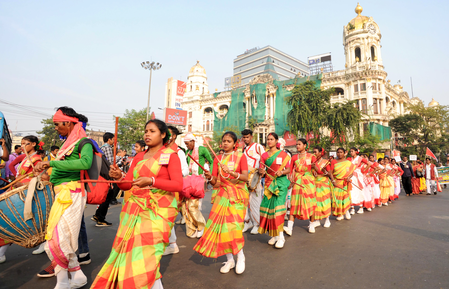
When West Bengal heads to the polls for the final phase of the Assembly election, the Matua community’s influence in North 24 Parganas, Nadia, and other key districts will be significant. Analysts suggest that the Matua-influenced areas could impact the results in around 40-50 Assembly seats, making them a crucial swing constituency.
Originating from East Bengal, the Matuas are Hindu Dalits who have faced challenges regarding citizenship and land rights. Their spiritual hub in Thakurnagar draws large crowds annually, reflecting their dual identity as Hindu Dalits and refugees without secure citizenship documents.
The Matuas’ voting patterns have shifted over the years, with some supporting the Trinamool Congress and others favoring the BJP after the Citizenship Amendment Act (CAA) was introduced. However, concerns have arisen regarding the potential impact of the CAA-NRC combination on their community, leading to confusion and fears of exclusion.
The Election Commission’s recent revision of electoral rolls has sparked mixed reactions within the Matua community, with some alleging selective targeting and others viewing it as a routine exercise. Civil society groups and activists are assisting Matuas in appealing against deletions from the voter lists, ensuring their participation in the democratic process.
In the upcoming elections, the BJP and Trinamool Congress are vying for the Matua vote by presenting contrasting narratives on issues like migration and identity. The community’s sizable population and strategic location near the Bangladesh border make their support crucial for political parties seeking to secure power in West Bengal.
