


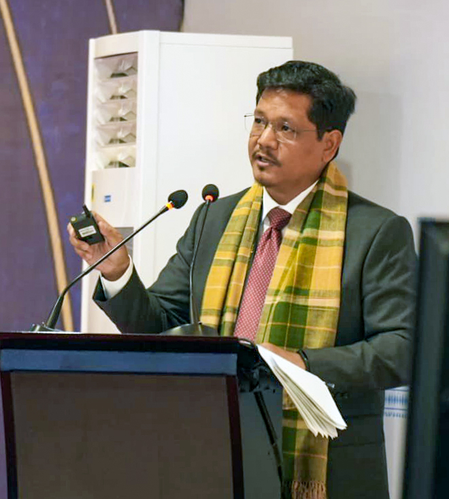
Meghalaya Chief Minister Conrad K. Sangma emphasized the significance of the state’s matrilineal system in promoting sustainable farming and food security globally. Speaking at the International Conference on Women Farmers and Sustainable Organic Agriculture, Sangma praised the pivotal role of women in Meghalaya’s agriculture, where they oversee land and agriculture, instilling a strong sense of commitment and sustainability in farming practices.
Sangma highlighted the state’s farmer-centric policies that have prioritized women’s involvement in agriculture for the past eight years. Meghalaya’s governance model focuses on tailored development strategies that leverage the region’s unique geographical, cultural, and ecological strengths instead of adopting external models. The Chief Minister stressed the importance of preserving indigenous agricultural knowledge alongside modern innovations to enhance productivity while maintaining ecological balance.
Underlining the need for regional cooperation, Sangma advocated for viewing the Northeast as an interconnected region with shared ecological and cultural traits. This approach, he suggested, would facilitate scaling up successful initiatives, attracting investments, and enhancing the global impact of sustainable organic agriculture. Sangma also emphasized the necessity of partnerships with various stakeholders to support organic farming initiatives while safeguarding farmers’ interests.
The conference, a collaboration between the Department of Agriculture and Farmers’ Welfare and IFOAM – Organics Asia, convened national and international delegates to discuss empowering women in agriculture, conserving natural heritage, and advancing sustainable organic farming practices through enhanced collaboration and knowledge exchange.
