


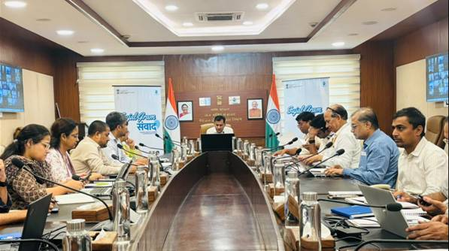
A discussion was held by the Ministry of Jal Shakti to enhance community-led water governance as part of the Jal Jeevan Mission (JJM) 2.0. Kamal Kishore Soan, Additional Secretary and Mission Director of National Jal Jeevan Mission (NJJM), emphasized the importance of ensuring the timely delivery of potable piped water to rural households and the need for water-quality testing to prevent wastage.
Soan highlighted that the newly established drinking-water systems are designed to cater to communities for the next 25–30 years. He stressed the significance of source sustainability, proper maintenance, and capacity building at the local level for effective water management. Since 2019, over six lakh villages have been included in the JJM, thanks to the active involvement of Panchayats, Gram Sabhas, Self-Help Groups (SHGs), and local operators (Nal Jal Mitras).
The ‘Sujal Gram Samvad’ witnessed village-level interactions across five Gram Panchayat headquarters, with more than 3,000 participants engaging in the virtual event. Soan encouraged the continuation of such initiatives to promote transparency, community engagement, and accountability at the gram panchayat level. He emphasized the importance of the Jal Seva Aankalan exercise to identify and address service gaps promptly.
District Collectors were urged to hold regular meetings of the District Water and Sanitation Mission to address water and sanitation issues effectively. The event, led by Y.K. Singh, NJJM Director, aimed to gather insights from village communities on operational practices and source sustainability, fostering a collaborative approach towards water management.
