


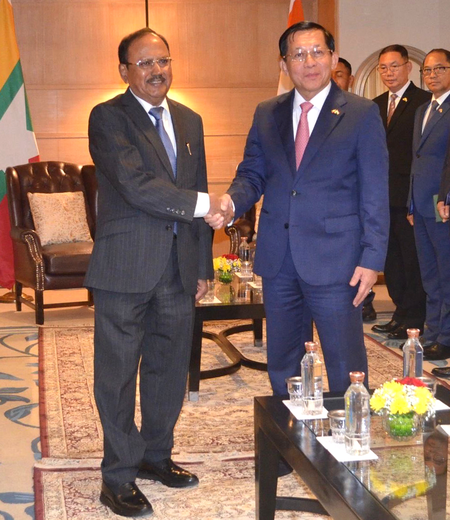
The recent visit of Myanmar’s President U Min Aung Hlaing to India held significance beyond diplomatic norms. It showcased Myanmar’s quest for a strategic balance, provided India with a chance to engage with a neighboring country that impacts its Northeast region, and sent a message to China about the complexities of influence.
India, unlike China, emphasizes a relationship with Myanmar that is not overshadowed by dominance. The visit highlighted India’s focus on spiritual and religious ties rather than involvement with armed border groups in Myanmar. This approach underscores India’s interest in a stable and sovereign Myanmar, crucial for the security of its Northeastern states.
India and Myanmar share a substantial land border, with deep cultural and social connections between communities on both sides. The instability in certain regions of Myanmar directly affects India through various channels like refugee flows, arms trafficking, and insurgent activities. India’s security interests are closely tied to Myanmar’s stability, making it a vital component of India’s regional security strategy.
The strategic importance of Myanmar is evident in India’s significant investments in key projects like the Kaladan Multi-Modal Transit Transport Project and the India-Myanmar-Thailand Trilateral Highway. These projects, beyond economic benefits, hold strategic value in enhancing connectivity, trade, and regional integration. A stable Myanmar is crucial for the success of these projects and for strengthening India’s ties with Southeast Asia.
In conclusion, a peaceful and sovereign Myanmar is not only in India’s interest but also contributes to regional stability. By engaging with Myanmar, India aims to foster a secure environment in its Northeast and establish alternative trade routes that reduce dependency on existing corridors. The visit of Myanmar’s President to India underscores the shared strategic goals and mutual benefits of the bilateral relationship.
