


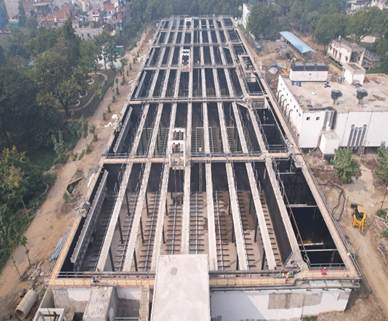
The National Mission for Clean Ganga (NMCG) has increased the treatment capacity by 538.03 MLD along the Ganga and its tributaries in 2025–26, as per the Jal Shakti Ministry. This capacity boost was achieved through 18 projects spanning states like Uttar Pradesh, Uttarakhand, Jharkhand, West Bengal, and Bihar. The completion of 28 sewage treatment plants (STPs) in the year marks a significant rise from the 22 STPs finished in the previous year.
These projects, amounting to an investment of nearly Rs 4,700 crore, highlight the ongoing efforts to fortify sewage treatment infrastructure and combat pollution in the Ganga basin. A statement emphasized that the accomplishments signify a dedicated approach to enhancing treatment capacity, finishing crucial projects, and tackling pollution hotspots in various states. Uttar Pradesh played a pivotal role in these achievements, with various projects executed in cities like Moradabad, Shuklaganj, Varanasi, Vrindavan, Prayagraj, and Agra, significantly bolstering sewage treatment infrastructure in the state.
The Varanasi project, concentrating on the Assi–BHU area, contributed the highest capacity addition of 55 MLD. In Prayagraj, a significant initiative involving drain interception, diversion, and Salori STP augmentation resulted in an extra 43 MLD capacity at a cost of Rs 331.75 crore. Moradabad also saw notable progress with pollution control efforts for the Ramganga, adding 25 MLD capacity, while Shuklaganj in Kanpur included 5 MLD through interception, diversion, and sewage treatment activities.
To enhance monitoring of STP infrastructure, NMCG introduced the Ganga Pulse Public Portal, ensuring transparency and accountability. This digital platform displays real-time data from STPs in Uttarakhand, Uttar Pradesh, Bihar, Jharkhand, and West Bengal, the statement noted.
