


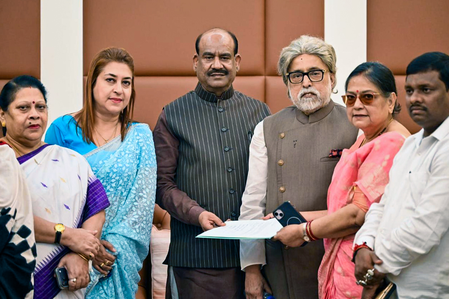
The Nationalist Citizens Party of India (NCPI) recently celebrated a significant political realignment on social media, hailing its newfound prominence in the Lok Sabha. Following key appointments within the party, including Sudip Bandopadhyay as Floor Leader, Shatabdi Roy as Deputy Leader, and Kakoli Ghosh Dastidar as Chief Whip, the NCPI announced its representation as the “real Trinamool” in Parliament. This sudden rise to national attention occurred when 20 dissident Trinamool Congress MPs merged with the NCPI, propelling it to become the fifth-largest party in the Lok Sabha and a major ally in the ruling National Democratic Alliance (NDA).
The NCPI, previously a lesser-known entity that did not contest Lok Sabha elections, gained prominence through the merger with rebel Trinamool MPs. Despite facing debates and criticism over potential violations of anti-defection laws, the rebels argue for legal protection under specific provisions. This maneuver has sparked discussions on the democratic process and representation, questioning the legitimacy of such political tactics in gaining legislative power. While the situation remains contentious, the NCPI MPs are optimistic about their official recognition and have scheduled a meeting to establish their “new Parliamentary party.”
The evolving dynamics in the Indian Parliament highlight the complexities of party alignments and the implications of such strategic moves on the political landscape. As the NCPI navigates its newfound role and alliances, the repercussions of this realignment extend beyond mere numerical shifts, raising broader concerns about the integrity of democratic processes and the mandate of elected representatives.
