


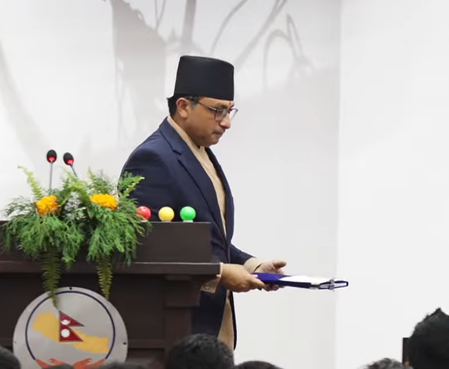
Nepal’s Finance Minister, Swarnim Wagle, revealed significant tax relief initiatives aimed at the middle class, similar to actions taken by the Indian government in February 2025. In a budget presentation of NPR 2.124 trillion for the fiscal year 2026-27, Minister Wagle highlighted raising the income tax exemption threshold for individuals to NPR 1 million, up from NPR 500,000.
The government also reduced the maximum personal income tax rate by 10 percentage points, from 39% to 29%, to alleviate the tax burden on citizens. Minister Wagle emphasized the reduction of customs duties on 273 types of industrial raw materials to support domestic industries, ensuring tariffs on raw materials are lower than those on finished goods.
To stimulate enterprises and businesses, expand the middle class, and enhance the overall economy, Minister Wagle conducted a comprehensive review of tax rates to provide relief. The government plans to amend the Foreign Investment and Technology Transfer Act to eliminate the minimum investment threshold for foreign investors and enhance the investment climate through digitalization.
Recognizing the importance of information technology for economic growth, Nepal aims to establish IT parks in major cities, improve high-speed internet infrastructure, and offer tax incentives for digital service exports. Additionally, measures are introduced to allow outward investment for the IT service sector expansion and facilitate remote work opportunities for individuals working for foreign employers.
The government is set to establish a fintech marketplace supervised by the Nepal Rastra Bank and position Nepal for the AI era by developing the country’s first ‘Sovereign AI Compute Centre’ in Kathmandu. By leveraging clean hydropower resources, Nepal plans to provide high-value AI computing services, utilizing its energy potential for AI-driven economic growth. The budget also includes initiatives to boost Nepal’s startup ecosystem through the Nepal Enterprise Facility platform.
