


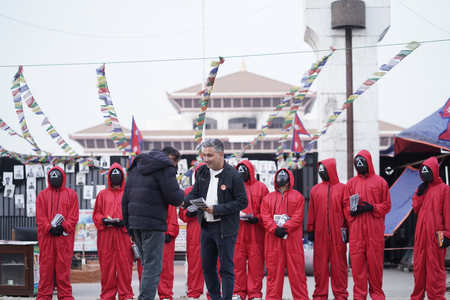
As Nepal conducted a crucial election, Asheem Man Singh Basnyat, an independent candidate from Kathmandu 1, showcased a budget-friendly campaign costing around Rs 5 lakh Nepalese rupees, significantly less than the permitted campaign expenses. This amount is about a fifth of the maximum limit set for candidates in his constituency, Kathmandu-1, which has the lowest spending cap. Basnyat, a 35-year-old tech entrepreneur, leveraged the unique urban profile of his constituency to launch an innovative campaign during his first foray into politics.
The Kathmandu-1 constituency stands out as the only one in Nepal entirely situated within the Kathmandu Metropolitan area, making it predominantly urban compared to other constituencies that include rural or municipal areas. With 48,489 registered voters, it is the smallest constituency in terms of landmass. Basnyat highlighted that in previous elections, winners secured slightly over 6,000 votes, a trend expected to continue in the current election. Holding a Masters in conflict, peace, and development studies, Basnyat is a regional director at Pathao, a prominent ride-hailing and delivery platform in Nepal.
Basnyat’s campaign focused on empowering youth, job creation, and digitalization, particularly emphasizing these aspects following the challenges posed by the Covid pandemic. Prior to his political debut, he championed legal initiatives to introduce e-commerce in Nepal during the pandemic-induced lockdown. Unlike traditional campaign methods involving print media and workers, Basnyat strategically utilized social media, where he has been actively engaged for several years due to his business ventures.
By concentrating on creating engaging content on social media platforms, Basnyat managed to garner significant attention for his campaign. Notably, he incorporated a unique strategy by dressing individuals in Squid Games costumes, a popular reference, to attract public curiosity. This unconventional approach, costing him a modest sum, generated substantial media coverage and public interest. Basnyat’s cost-effective campaign, aimed at securing around 6,000 votes, now awaits the ballot results to determine its success.
