


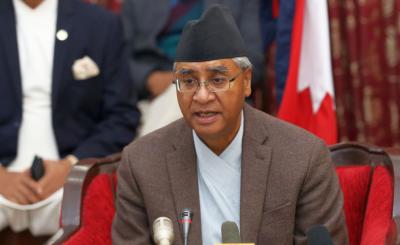
The Nepali Congress is facing a possible split as two factions within the party clash over the ongoing Special General Convention in Kathmandu. One faction, led by party president Sher Bahadur Deuba, is at odds with another faction led by General Secretaries Gagan Thapa and Bishwa Prakash Sharma regarding the convention’s legitimacy. The dispute, occurring just before the scheduled House of Representatives elections in March, has raised concerns among party members about its impact on electoral outcomes.
The Thapa–Sharma faction asserts that a majority of General Convention members have participated in the Special General Convention and is set to conduct elections for a new Central Working Committee, aiming to end Deuba’s leadership since 2016. Gagan Thapa is positioned as the frontrunner for the party presidency, with General Secretary Sharma endorsing him for both party president and as the potential prime ministerial candidate for the Nepali Congress in the upcoming government. However, Thapa’s potential elevation could lead to a party split as a significant portion of party leaders remain aligned with Deuba, who opposed the convention.
Efforts to reconcile the two factions through discussions on Tuesday did not yield agreement on key issues, according to leaders close to Thapa and Sharma. A potential compromise in leadership is being considered by the Thapa–Sharma faction, contingent on specific conditions being met by the Deuba-led establishment. The faction demands Deuba’s resignation from all party responsibilities, his exclusion from the upcoming House of Representatives elections, and formal acknowledgment of the Special General Convention by the party leadership.
Subas Pokharel, a proponent of the Special General Convention, outlined three preconditions for consensus, including Deuba’s complete disengagement from party affairs and granting full executive authority to acting president Purna Bahadur Khadka. While Deuba reportedly agreed to acknowledge the convention, he hesitated on the other conditions during discussions. The Thapa–Sharma faction’s reluctance to involve Deuba in candidate selection for the upcoming elections could lead to a split, with both sides potentially claiming leadership legitimacy before the Election Commission.
The Nepali Congress has a history of divisions, notably in 2002 when a split occurred after Deuba dissolved the House of Representatives during his premiership. The party reunited in 2007 following the success of the 2006 people’s movement. Deuba, unable to contest the party presidency as per party rules, is once again at the center of a dispute threatening a split. Despite requests from a majority of Central General Convention members last year to convene a Special General Convention, the leadership opted for a regular General Convention in May. Thapa and Sharma proceeded with the Special General Convention, leading to the current standoff within the party.
The Thapa–Sharma faction’s political and moral victory may be imminent given the reported attendance of a majority of Central General Convention members at the Special General Convention. However, the legal recognition of the convention’s decisions by the Election Commission and courts remains uncertain.
