


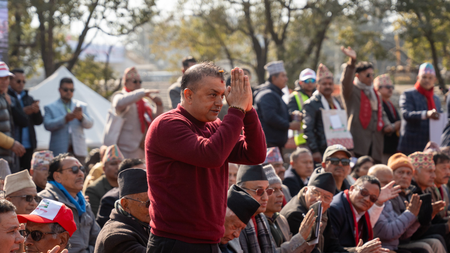
Nepali Congress President Gagan Thapa faced a significant loss in this year’s parliamentary elections to Amaresh Kumar Singh of the Rastriya Swatantra Party. Thapa, who was also the party’s prime ministerial candidate, received 22,831 votes in Sarlahi-4, Madhesh Province, while Singh secured 35,688 votes, marking another setback for prominent leaders.
Thapa, who assumed the party presidency in January this year amid a contentious Special General Convention, not only aimed to win but also to enhance the party’s electoral performance. However, established political entities like the Nepali Congress, CPN (UML), and the Nepali Communist Party are encountering challenges from emerging political forces, which have gained a significant number of seats under the First-Past-the-Post system.
Despite contesting from Sarlahi-4, a stronghold of his party, Thapa, who relinquished his long-held Kathmandu-4 constituency, suffered defeat at the hands of a former legislator from his own party. Amaresh Kumar Singh, who has a history with the Nepali Congress and a background in parliament and constitution-making, emerged victorious in the elections, representing the Rastriya Swatantra Party.
