


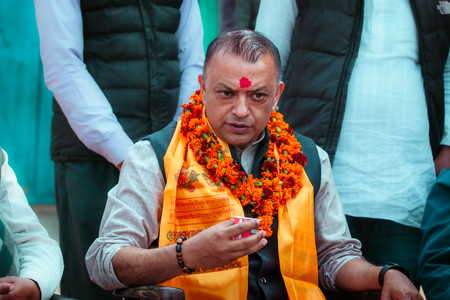
Gagan Thapa, who became the Nepali Congress president in a controversial special convention, has stepped down from his position due to the party’s poor performance in the recent parliamentary elections. Thapa, who also lost in his constituency, faced defeat as his party came second, with many other top leaders suffering similar outcomes.
Thapa, who ran as the Prime Ministerial candidate for his party, received 22,831 votes compared to his opponent’s 35,688 votes. The Nepali Congress, which won significantly fewer seats than in the previous elections, faced calls for Thapa’s resignation following the electoral defeat.
The party’s slogan of “We changed the Nepali Congress, and we will change the country” did not resonate with voters, as the Rastriya Swatantra Party led by Rabi Lamichhane and Balendra Shah secured a dominant victory in the House of Representatives. Thapa submitted his resignation to Vice-President Bishwo Prakash Sharma, citing the election results as the primary reason for his decision.
The party’s statute dictates that if the central president resigns, the resignation must go through the vice-president to the Central Working Committee. A meeting of the Central Working Committee is set for Friday to address Thapa’s resignation. If accepted, the vice-president will assume the role of acting president until a new central president is elected in a special general convention within six months.
Thapa, a prominent figure in the Nepali Congress, gained popularity during the 2006 people’s movement for his stance against the monarchy. Despite high expectations following his election as president, the party’s poor performance in the recent elections led to criticism from within the party, especially from supporters of former Prime Minister Sher Bahadur Deuba.
