


Union Agriculture Minister Shivraj Singh Chouhan announced progress in research on ‘tiwra’, also known as ‘khesri’ or grass pea, by scientists at the Indian Agricultural Research Institute (IARI) and the Indian Council of Agricultural Research (ICAR). A less harmful variety of ‘tiwra’ is being developed and will soon be available in the market. ‘Tiwra’ was previously banned in India due to its association with lathyrism disease in humans.
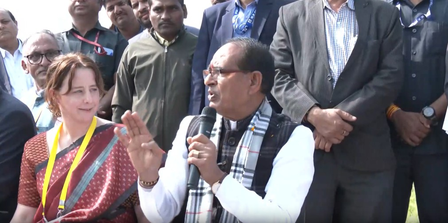
Chouhan, speaking at a gathering of farmers, mentioned plans to establish 1,000 new dal mills, with 55 of them to be set up in Madhya Pradesh. He emphasized the need for scientists and officers to engage directly in fieldwork rather than remaining confined to offices. The Agriculture Department aims to procure various pulses at minimum support prices, ensuring full procurement from farmers.
The Agriculture Minister encouraged farmers to cultivate pulses without concerns and assured the continuation of the price difference scheme for commodities like pigeon pea, urad, masoor, and chana. He highlighted ongoing efforts to extract pulse protein from different varieties to enhance farmers’ benefits. Chouhan urged farmers to increase pulse cultivation and assured support for their endeavors.
ICAR scientists are actively working on developing safer ‘tiwra’ varieties with reduced levels of the neurotoxin responsible for neurolathyrism. These efforts aim to replace high-toxin varieties with alternatives suitable for human consumption. Notable varieties like Ratan, Prateek, and Mahateora have been released, featuring lower toxin content and improved yields in states like Madhya Pradesh, Maharashtra, Chhattisgarh, Bihar, and Odisha.
