


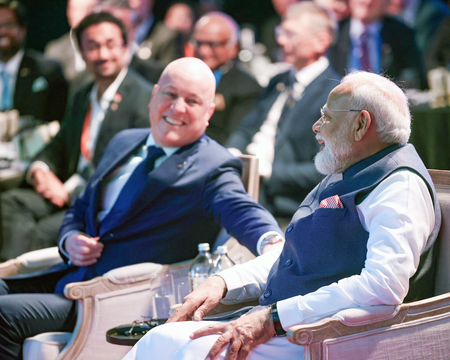
New Zealand has historically viewed China as a key economic partner. However, recent developments, including the signing of a Free Trade Agreement (FTA) with India and Prime Minister Narendra Modi’s visit on July 11, indicate a strategic pivot by New Zealand towards broadening and balancing its economic and security relationships. The FTA is seen as a progressive partnership by the Indian government, offering growth opportunities to sectors like textiles and leather.
The FTA, according to New Zealand Trade Minister Todd McClay, will lead to the elimination or reduction of tariffs on 95 percent of exports, including products like kiwifruit, apples, meat, wool, coal, and forestry. This agreement also aims to tap into India’s expanding middle class market.
Recognizing India’s potential as a significant international market, the FTA is viewed as a gateway for New Zealand to enhance its services and product offerings. With India’s economy surpassing Japan to become the world’s fourth-largest, and with projected growth rates exceeding 6 percent, the FTA signifies a shift towards exploring new business prospects in India.
The strategic partnership between New Zealand and India, announced during PM Modi’s visit, signifies a deeper engagement beyond trade. This partnership includes initiatives like a joint working group on counterterrorism, cybersecurity collaborations, intelligence exchanges, and strengthening maritime defense ties. The evolving dynamics in the region, marked by strategic competition and Chinese influence efforts, have prompted New Zealand to recalibrate its priorities towards a more balanced approach.
Prime Minister Christopher Luxon emphasizes the importance of the Indo-Pacific region for New Zealand’s national interests, highlighting the intertwined nature of security and economic concerns. The evolving landscape has led New Zealand to diversify its trade relationships and enhance its strategic engagements beyond traditional economic ties.
