


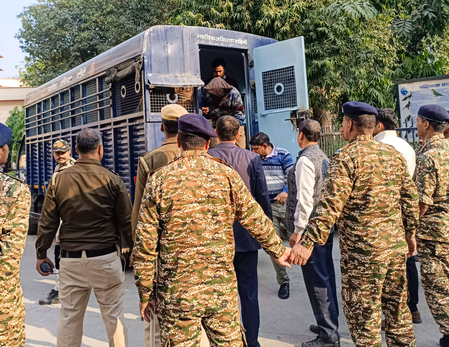
The National Investigation Agency’s 7,500-page charge sheet in the Faridabad module case disclosed that the group had established a hub in Lucknow to procure chemicals for making explosives. Led by Umar Un Nabi, the module members in Lucknow identified locals to assist in obtaining materials for explosives, with plans to target crowded places and Hindu Temples. The probe uncovered that the module had also earmarked key locations in Lucknow for potential attacks, including the Uttar Pradesh State Assembly, Secretariat, and Raj Bhawan.
The investigation indicated that the initial blasts were intended for Delhi and nearby areas, followed by a focus on Uttar Pradesh. The group not only sourced bomb-making materials but also studied logistics to carry out attacks effectively in Uttar Pradesh. Comprising mainly medical professionals, the module utilized their scientific expertise to understand the process of making explosives, including chemical compositions and detonations.
The module extensively used YouTube to learn how to convert agricultural chemicals into military-grade explosives, managing to acquire 2.5 tonnes of fertilizer for this purpose. Of particular concern was their production of triacetone triperoxide (TATP), a highly potent explosive difficult to detect at security checkpoints. Despite the risks associated with TATP’s volatility, the members, with scientific backgrounds, monitored and stabilized the chemicals’ integrity using specialized cooling pitchers and stabilizing substances.
Additionally, the group prepared an arsenal that included launch heads for rocket strikes, Erythritol PETN, and materials for pipe bombs. They even planned to use domestic gas cylinders as large bombs by filling them with explosive slurry. The meticulous preparations and material sourcing indicated a larger operational scale beyond Delhi and Uttar Pradesh, as per the NIA findings.
