


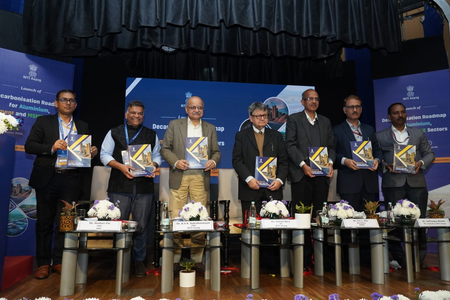
NITI Aayog has revealed a roadmap for decarbonizing the aluminium, cement, and MSME sectors in India to support the nation’s industrial and infrastructure expansion towards achieving the $30 trillion Viksit Bharat Goal. CEO B.V.R. Subrahmanyam highlighted the establishment of the Green Transition division at NITI Aayog, emphasizing the division’s significant growth and expertise in climate change and green initiatives.
The roadmap outlines ambitious targets for 2047, including a substantial increase in cement and aluminium production to address the industry’s 24% contribution to national GHG emissions. Cement production is set to rise from 390 million tons to 1743 million tons by 2047, with corresponding GHG emissions projections.
To mitigate emissions, the roadmap proposes strategies like using Refuse Derived Fuel from Municipal Solid Waste in cement production, incorporating clinker substitutes, and implementing carbon capture and utilization initiatives. In the aluminium sector, efforts are focused on reducing GHG emissions, which are expected to increase significantly by 2070.
The report also addresses the challenges in the aluminium sector, where electricity consumption contributes significantly to emissions during manufacturing. Short-term solutions involve transitioning to renewable energy sources, with policy options including a dedicated renewable energy grid and the conversion of power plants for sustainability.
Identifying 69 million MSMEs as key players in emission reduction, the roadmap suggests energy efficiency measures, adoption of green electricity, and utilization of low-emission fuels like natural gas. By leveraging these strategies, the MSME sector aims to achieve a substantial reduction in emissions and energy consumption over the next five years.
