


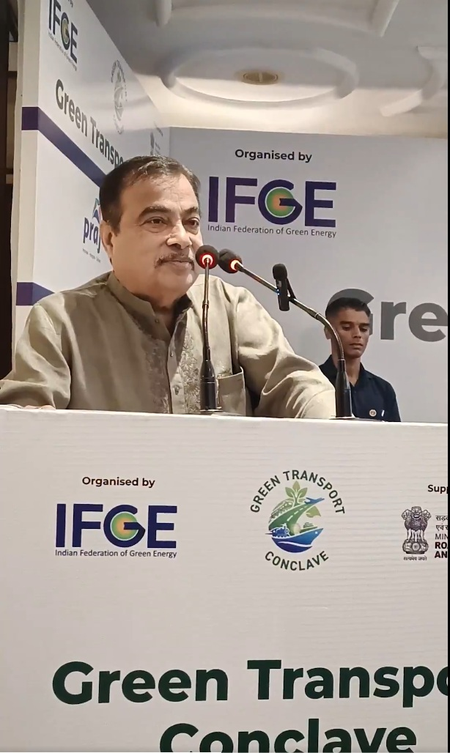
Union Road Transport and Highways Minister Nitin Gadkari emphasized the importance of India striving for 100% ethanol blending in auto fuel to reduce reliance on imported oil. Currently, India depends on imports to fulfill 87% of its oil needs, making the country susceptible to energy supply disruptions due to geopolitical uncertainties like conflicts in regions such as Iran. Gadkari stressed the necessity of enhancing the production of alternative fuels and biofuels to address this issue.
Speaking at the Indian Federation of Green Energy’s Green Transport Conclave, Gadkari highlighted the urgency for India to achieve complete ethanol blending in the near future. He underlined that the ongoing energy crisis, exacerbated by conflicts in West Asia, underscores the need for India to achieve self-sufficiency in the energy sector. Prime Minister Narendra Modi had introduced petrol blended with 20% ethanol in 2023, allowing Indian vehicles to operate on E20 petrol with minimal engine modifications to prevent damage and other concerns.
Gadkari also addressed the need to discourage the use of petrol and diesel vehicles while acknowledging the challenge of transitioning consumers away from such vehicles. He mentioned the resistance from the petroleum sector against the adoption of E20 and urged automobile manufacturers to prioritize quality over cost to expand their market reach. Additionally, he emphasized the potential of green hydrogen as a future fuel but highlighted the importance of reducing the operational costs of hydrogen fuel stations to ensure financial viability.
The minister emphasized the significance of lowering the cost of producing hydrogen fuel to $1 per kilogram to position India as an energy exporter. He advocated for hydrogen production from waste materials and emphasized the employment opportunities that could arise from embracing a circular economy approach. Gadkari also mentioned that the upcoming Corporate Average Fuel Efficiency III standards, effective from April 1 next year, are expected to have minimal impact on electric and flex-fuel vehicles.
