


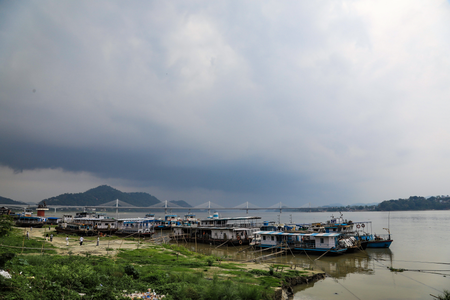
The Southwest monsoon has reached significant parts of the Northeastern region, arriving two days later than usual. This late onset has brought widespread rainfall, raising hopes for a normal to above-normal monsoon season in the area. Officials from the Meteorological Centres in Guwahati and Agartala confirmed the monsoon’s entry into Tripura, Mizoram, Nagaland, Manipur, Assam, and Arunachal Pradesh on Sunday.
Within the next few days, the Southwest monsoon is expected to cover all Northeastern states, according to an IMD official in Agartala. Last year, the monsoon arrived in most parts of the region on May 26, making this year’s onset delayed. Favorable meteorological conditions currently prevail in the region, facilitating the further advancement of the monsoon in the coming days.
Parts of the Northeast region, Andaman and Nicobar Islands, Karnataka, Konkan and Goa, Lakshadweep, Maharashtra, Sub-Himalayan West Bengal, Sikkim, Tamil Nadu, and Puducherry are also expected to receive rainfall in the next few days. The IMD stated that conditions are favorable for the Southwest monsoon to advance into the remaining parts of the Northeastern states, as well as some areas of Sub-Himalayan West Bengal and Sikkim in the next few days.
Although strong El Nino conditions are forecasted in certain parts of India this year, the Northeastern region is unlikely to be significantly impacted due to its extensive forest cover, varied topography, and favorable climatic conditions. The IMD official mentioned that rainfall during the Southwest monsoon season in the Northeastern states is predicted to be normal to above normal.
A weather expert highlighted the potential development of one of the strongest El Nino events during the second half of 2026, with effects intensified by ongoing global climate change. Despite concerns related to El Nino, the Northeastern region is expected to receive sufficient precipitation during the monsoon months, crucial for the agrarian economy where rain-fed agriculture is prevalent. Adequate rainfall is anticipated to support agricultural activities, replenish water resources, and enhance environmental conditions in the region.
