


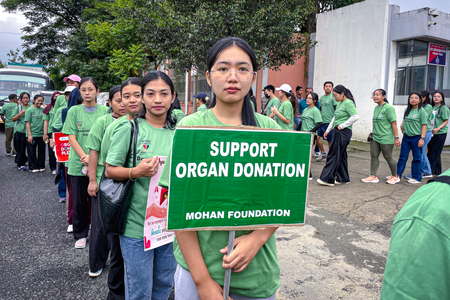
In a noteworthy development, organ transplants in India have surged fourfold, rising from under 5,000 in 2013 to nearly 20,000 by 2025, as per government data. Currently, around 18% of transplants utilize organs from deceased donors. Moreover, more than 4.8 lakh individuals have enrolled to donate organs and tissues posthumously through an Aadhaar-based verification system since September 17, 2023, according to the Ministry of Health and Family Welfare.
The National Organ and Tissue Transplant Organization (NOTTO) has played a pivotal role in advancing organ donation and transplantation in the country, achieving unprecedented progress in donation, allocation, and transplantation. In 2025, over 1,200 families generously donated organs of their deceased family members, thereby saving numerous lives and enhancing the quality of life for many others.
India has made significant strides in complex organ transplants such as heart, lungs, and pancreas, with each donor now being a multi-organ donor. The country has also excelled in hand transplants, surpassing all other nations in this field. These accomplishments underscore the government’s commitment to translating policy vision into tangible, life-saving outcomes, as stated by the Health Ministry.
The nation boasts a cadre of world-class transplant professionals and surgeons who deliver outcomes on par with global standards at a fraction of the cost. Families increasingly embrace organ donation during times of bereavement, offering the gift of life and instilling hope in numerous recipients. NOTTO advocates for fostering a culture of organ and tissue donation in governmental bodies, institutions, and organizations, promoting multi-organ donations as a familial right.
Under NOTTO’s leadership, India’s progress aligns with its goal of self-sufficiency in advanced healthcare, reducing reliance on foreign transplants while upholding ethical, transparent, and fair practices domestically.
