


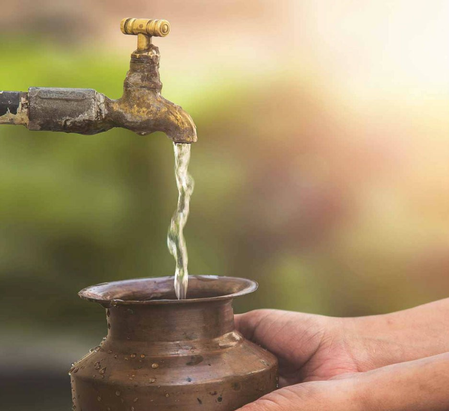
Under the Jal Jeevan Mission (JJM), more than 15.79 crore rural households, which accounts for 81.57% of such households, now have functional tap water connections. This marks a significant increase from 3.24 crore households, or 16.71%, in August 2019. The Parliament was informed about this development on Monday by Minister of State for Jal Shakti, V. Somanna.
As per the data shared in a written reply in Rajya Sabha, a total of 189 districts and 2,50,021 villages have been covered under the ‘Har Ghar Jal’ initiative, based on information updated by States/UTs on the IMIS portal until December 31, 2024. The Union Budget for 2025–26 has extended the Jal Jeevan Mission until December 2028, as announced by the Finance Minister.
The World Health Organisation (WHO) estimates that achieving the goals of the Jal Jeevan Mission will result in saving 5.5 crore hours daily for women in the country, which were previously spent on water collection. Additionally, it is projected to prevent nearly 400,000 deaths from diarrhoeal diseases. Nobel laureate Michael Kremer suggests that increased safe water coverage could potentially reduce under-five child mortality by around 30%.
Research conducted by IIM Bangalore and the ILO indicates that the implementation of the Jal Jeevan Mission could lead to significant job creation. It is estimated that millions of person-years of direct and indirect employment opportunities could be generated through the various phases of the Mission. To enhance community participation, the operational guidelines of the JJM include the formation of a Village Water and Sanitation Committee (VWSC)/Paani Samiti/User Group to manage water supply responsibilities within the village.
The Village Water and Sanitation Committee typically comprises 10-15 members, including up to 25% elected panchayat members, 50% women, and members from weaker sections (SC/ST) in proportion to their population. Moreover, a special initiative called Jal Sanchay Jan Bhagidari (JSJB) under the Jal Shakti Abhiyan (JSA): Catch the rain (CTR) campaign was initiated on September 6, 2024. This initiative aims to promote collaborative community-driven water conservation efforts and focuses on improving water management through cost-effective, scientifically-designed artificial recharge structures, with active involvement from local communities, industries, and other stakeholders.
