


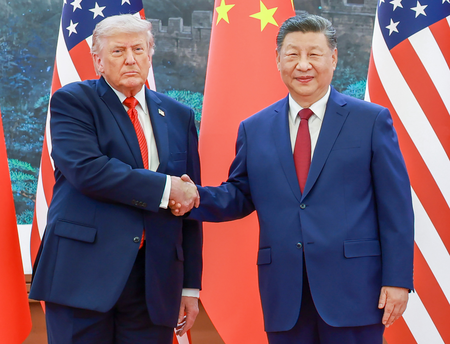
President Donald Trump stated that the United States has revamped its ties with China and bolstered its position in the Indo-Pacific region through military expansion, trade pressure, and enhanced energy dominance. Trump, speaking at a White House Cabinet meeting, expressed satisfaction with his recent meeting with Chinese President Xi Jinping, describing it as “amazing.” He emphasized that China now perceives Washington differently compared to past administrations, with the relationship being very positive.
Trump credited his administration’s tariffs and economic strategies for prompting China to adopt a more balanced trade relationship with the US. He highlighted the profitability of current business dealings with China and stressed that China now respects the US. The President linked this economic approach to broader US military and geopolitical endeavors in the Indo-Pacific and globally, underscoring increased defense spending and modernization efforts.
Secretary of War Pete Hegseth disclosed significant investments in new military systems, including drones, missile defense, and advanced aircraft production. Hegseth praised Trump’s commitment to a proposed $1.5 trillion defense budget, asserting the US’s intent to lead in drone technology. The Pentagon reported record recruitment rates for the second consecutive year, with private defense manufacturers investing billions in new production facilities due to administration policies.
Treasury Secretary Scott Bessent affirmed the strength and resilience of the US economy amid global tensions involving Iran and energy markets. Bessent highlighted a surge in business investment during Trump’s second term, citing increased factory construction, manufacturing jobs, and capital expenditures growth. He noted the stock market’s forward-looking nature and its positive outlook beyond current conflicts.
Trump emphasized the US’s “energy dominance strategy,” attributing it to expanded oil and gas production that has bolstered the country’s global geopolitical standing. He claimed that the US now produces more oil than Russia and Saudi Arabia combined. Officials tied the administration’s economic and defense policies to broader strategic competition with major powers like China, although China was briefly mentioned during the Cabinet session.
