


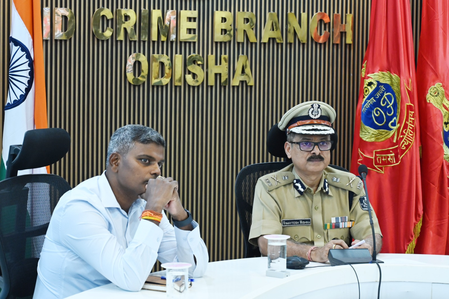
Bhubaneswar, Aug 14 (IANS) The Odisha government on Friday organised a massive statewide cyber awareness campaign to combat the growing threat of cybercrime and promote safe and responsible digital behaviour among students and young people, while empowering them to become ambassadors of cyber awareness.
The campaign was organised by the Odisha Police in collaboration with the School and Mass Education Department and the Higher Education Department.
The campaign, held under the chairmanship of Odisha Director General of Police (Crime Branch) Vinaytosh Mishra, witnessed the participation of more than 20,000 schools and over 2,000 colleges across 35 police districts participating through live webcast and video conferencing.
More than 40 lakh students, teachers, parents and police personnel took part in the programme.
According to an official statement, students and young people are increasingly falling victim to online fraud, blackmail and various forms of digital exploitation.
“In some cases, there have also been instances of people unknowingly making their bank accounts, SIM cards or identity documents available for misuse by cybercriminals. Against this backdrop, the key objectives of the campaign were to make the younger generation aware of cyber threats, educate them about the safe use of digital platforms and empower them to become ‘ambassadors of cyber awareness’ in their families and society,” the state government said.
Odisha Governor Hari Babu Kambhampati urged the students to remain alert and aware about cyber security.
Chief Minister Mohan Charan Majhi highlighted the role of young people in building a cyber-safe Odisha and called upon them to act as ambassadors of cyber awareness among their families, friends and communities.
During the programme, participants were advised to immediately call ‘1930’ and lodge a complaint on the “cybercrime.gov.in portal” in case of cyber financial fraud.
They were told that early reporting increases the chances of preventing the transfer of fraudulent funds and recovering the money.
The programme also stressed that banks, government offices and police officials do not ask for OTPs, PINs, CVVs or passwords.
People were cautioned against sharing such information and were advised to report demands for money in the name of ‘digital arrest’ by calling ‘1930’.
Students facing online blackmail or digital exploitation were advised not to panic or pay money, but to immediately inform their parents, teachers or police and preserve digital evidence.
The campaign concluded with a collective pledge to promote cyber awareness at the grassroots level and the message, “Stay Aware, Stay Safe — Cyber-Safe Odisha”.
–IANS
grm/khz
