


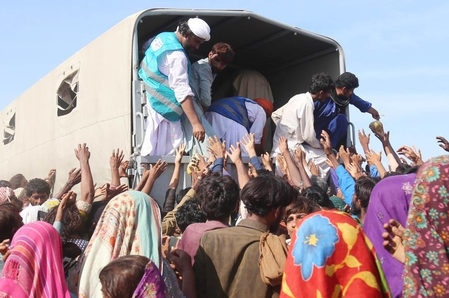
Pakistan has been listed among the world’s top 10 fragile nations with a high concentration of global acute food insecurity, as per a United Nations-backed report. The 2026 Global Report on Food Crises identified Pakistan, along with countries like Afghanistan, Bangladesh, and Nigeria, as primary centers of acute hunger. In 2025, Pakistan was among the 10 nations facing the largest food crises, with approximately 11 million people experiencing severe food insecurity.
Among those affected in Pakistan, 9.3 million individuals were in “crisis” conditions, while 1.7 million were in the “emergency” category, just short of famine. The report uses the Integrated Food Security Phase Classification (IPC) system to define a food crisis as a situation requiring urgent action to safeguard lives and livelihoods. Acute food insecurity arises when access to food is severely restricted, posing a threat to survival.
Extreme weather, such as heavy rains and floods leading to crop damage, continues to contribute to food insecurity in Pakistan. The report highlighted severe floods globally in 2025, affecting livelihoods and food security. In Pakistan, heavy monsoon rains and flash floods impacted over 6 million people, resulting in the destruction of cropland and infrastructure.
The report also delves into nutrition analysis, identifying Balochistan, Sindh, and Khyber Pakhtunkhwa in Pakistan as areas of concern. Despite insufficient recent data to assign a formal severity classification for 2025, Pakistan is mentioned in the report due to vulnerabilities related to diet, healthcare access, water, sanitation, and disease. The report predicts a 6% inflation rate in Pakistan for 2026, adding pressure to the system.
Pakistan’s inclusion among the top 10 nations in the report underscores the critical need and the broadening of data coverage. The analysis expanded from 43 rural districts in 2024 to 68 districts in 2025, encompassing regions in Balochistan, Khyber Pakhtunkhwa, and Sindh. This expansion increased the share of Pakistan’s population included in the analysis from 16% to 21%, incorporating over 14 million more people.
