


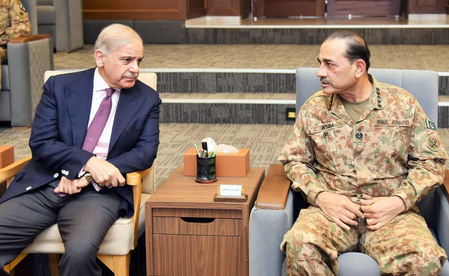
Pakistan’s democracy is under scrutiny as the new Army Chief, Asim Munir, consolidates power by bringing key institutions under military control. Munir aims to centralize authority by having all security-related institutions, including the police forces, under the Pakistan Army’s command. This move has raised concerns about the military’s influence over crucial decision-making processes.
Munir’s push for increased defense spending has sparked tensions with the government, particularly regarding budget allocations. While the Army Chief advocates for a substantial rise in defense expenditure, the government led by Prime Minister Shehbaz Sharif emphasizes the need for a more balanced approach that prioritizes public welfare. This disagreement underscores a broader power struggle between the military and civilian leadership.
The proposal to unify security forces under a single command is justified by Munir as a strategy to combat militant groups like the Balochistan Liberation Army and Tehreek-e-Taliban Pakistan more effectively. However, critics argue that this move is primarily aimed at consolidating military control over the country, blurring the lines between civilian and defense functions. Such a shift could have far-reaching implications for governance and regional stability.
Munir’s ambitions to centralize authority extend beyond security forces to encompass provincial governments, raising concerns about potential authoritarian tendencies. Critics warn that concentrating power in the military’s hands could exacerbate existing grievances in regions like Sindh, Balochistan, and Khyber Pakhtunkhwa. The populace in these areas, already disillusioned with the government’s neglect, may resist further centralization efforts, leading to heightened unrest and conflict.
