


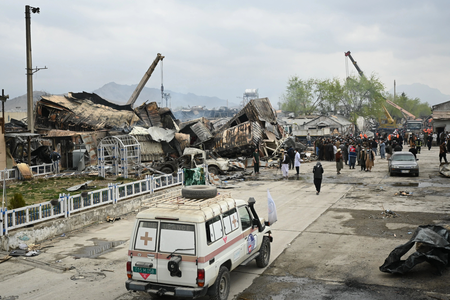
Pakistan has conducted more than 10 airstrikes in Afghanistan over the last five months, leading to the deaths and injuries of over 800 civilians, as per reports from Afghan media outlet Tolo News. The strikes targeted various Afghan provinces, such as Khost, Paktia, Paktika, Kunar, Kabul, Nangarhar, and Kandahar, with civilians suffering the most casualties. Civilian infrastructure like residential houses, hospitals, schools, and universities has also been hit by these attacks.
“Pakistan’s military, intelligence agencies, and political leaders are following a strategy to destabilize Afghanistan, resulting in the killing of Afghans, increased insecurity, and attempts to make Afghanistan Pakistan’s backyard,” stated political analyst Akhtar Mohammad Rasikh as quoted by Tolo News. The report highlighted significant incidents of Pakistani military attacks in Afghanistan this year, including the February 21 airstrikes that killed 18 people, including 11 children, in Paktika, Nangarhar, and Khost provinces. Another attack on a drug rehabilitation center in Kabul on March 16 reportedly claimed over 400 lives and left more than 260 injured.
On April 27, an attack on Sayed Jamaluddin Afghani University in Kunar province injured about 30 students and lecturers. Subsequent airstrikes on June 10 in Khost, Kunar, and Paktika provinces resulted in the deaths of 13 individuals. Moreover, on June 28, Pakistani military airstrikes in Paktia, Paktika, and Kunar provinces led to the deaths of 36 civilians, including women and children, with 163 others sustaining injuries, as confirmed by Taliban Deputy Spokesman Hamdullah Fitrat. Military analyst Sadiq Shinwari emphasized that Pakistan’s repeated airstrikes, including recent attacks, violate Afghanistan’s territorial integrity and have caused unjustifiable civilian casualties, particularly among women and children.
Several analysts have labeled Pakistan’s attacks on Afghanistan and the alleged targeting of civilians as “war crimes” and have urged international human rights organizations to investigate. Despite Pakistan citing the presence of militant groups in Afghanistan as a reason for cross-border attacks, reports suggest that ISIS-affiliated centers are still operational within Pakistan.
