


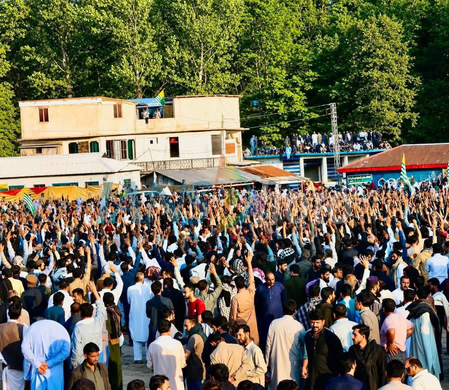
There is growing concern in Pakistan as protests in Pakistan-occupied-Kashmir (PoK) persist despite a severe crackdown. The arrest of Shaukat Nawaz Mir, a key figure in PoK and a leader of the Joint Awami Action Committee (JAAC), was a move to discourage protesters. Mir was apprehended in a coordinated operation and transferred to Rawalpindi.
Authorities in Pakistan seem to be altering their approach in response to the ongoing protests in PoK. Despite previous measures like forced disappearances and firing at demonstrators, the people of PoK have remained resolute and intensified their protests. The establishment now believes that detaining top leaders could dampen spirits and potentially quell the protests.
The JAAC has asserted that no amount of pressure will halt their demonstrations, emphasizing that the movement is driven by the people rather than any specific organization. While Mir has been detained, several other leaders are facing charges under anti-terrorism laws. The authorities aim to portray their actions as a fight against terrorism rather than mere public dissent.
The protesters in PoK are demanding various rights and an end to resource exploitation, yet the establishment has not met these demands. The situation has escalated to the extent that people in the region are now advocating for independence from Pakistan. This unrest has been exacerbated by controversial statements from Pakistan’s Defence Minister, further widening the divide.
Efforts to shift focus to India and accuse it of instigating the protests have not gained traction. Pakistan has tried to divert attention by highlighting the Indus Water Treaty, aiming to deflect from internal issues. The country’s economic challenges and infrastructure problems, such as water mismanagement and dam issues, remain unaddressed amidst the ongoing turmoil.
