


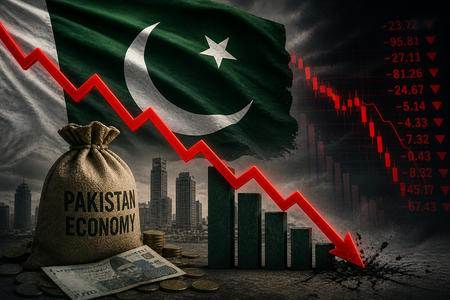
Pakistan is struggling with a growing foreign exchange crisis caused by the need to repay around $4.8 billion of external debt, as per a report. Foreign direct investment (FDI) in the country dropped by 33% in FY26 to $1.195 billion, continuing a downward trend from $1.92 billion in 2023–24 and $1.83 billion in 2024–25. FDI as a percentage of GDP remained below 0.45%.
Despite efforts to implement policies, sustaining stability is uncertain as Islamabad has not succeeded in boosting investor confidence. The report highlighted a lack of faith in the economy, evident through the departure and downsizing of various multinational companies in recent years.
Notably, Procter & Gamble decided to close its manufacturing operations in Pakistan, while other companies like Shell, Telenor, Uber, Yamaha, Eni, foreign banks, and pharmaceutical firms opted to downsize or cease operations in the country. The report also cited data from a labor force survey indicating a rise in the unemployment rate from 6.3% to 6.9% between 2020–21 and 2024–25, with women and youth bearing the brunt of the increase.
Pakistan’s economic and fiscal vulnerabilities are highlighted by its public debt soaring to Rs 80.52 trillion by the end of FY25, with external debt and liabilities reaching $138 billion. The country’s economic growth has averaged about 1.7% over the past three years, with government debt amounting to 70% of GDP and gross financing needs ranking among the highest globally.
The report also underscored the economy’s susceptibility to shocks from West Asia, as Pakistan allocates approximately 4% of GDP annually for fuel and fertilizer imports from the Gulf region. The heavy reliance on fuel, food, and remittances from West Asia and the Gulf has strained the economy, leading Islamabad to implement austerity measures such as school closures and reduced work weeks to address the oil crisis.
