


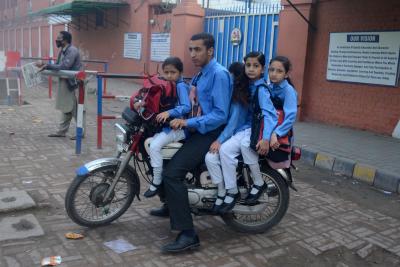
Pakistan has been placed at the bottom of South Asia’s literacy ranking, with a mere 63 percent literacy rate, significantly lower than the regional average of 78 percent. This educational shortfall is highlighted as Pakistan’s most critical economic weakness, hindering its competitiveness in the global economy. The Express Tribune emphasized that without a well-educated workforce, Pakistan’s economic prospects are severely compromised.
The country’s struggle with illiteracy poses a major obstacle to progress, as highlighted by the Free and Fair Election Network report. Even if Pakistan were to eliminate terrorism, the lack of a skilled workforce due to widespread illiteracy would impede the development of high-skilled industries. The editorial stressed that various governance models in the past have failed to address this fundamental issue, leading to a persistent cycle of underdevelopment.
Recent data from the Household Integrated Economic Survey revealed that approximately 20 million school-age children, accounting for 28 percent of the population, are not attending school in Pakistan. Despite official acknowledgments of an ‘education emergency,’ progress in addressing this crisis has been slow and inadequate. The Business Recorder pointed out that political rhetoric alone cannot rectify the deep-rooted structural deficiencies in the education system.
The survey findings underscore the persistent gender disparity in education, particularly affecting rural girls in regions like Sindh and Balochistan. In Pakistan, a significant proportion of boys and girls are deprived of educational opportunities, reflecting societal norms, poverty, and inadequate public education services. The editorial highlighted that economic constraints force many boys into early employment, while girls face barriers such as familial restrictions and perceived irrelevance of schooling, exacerbating the education crisis.
