


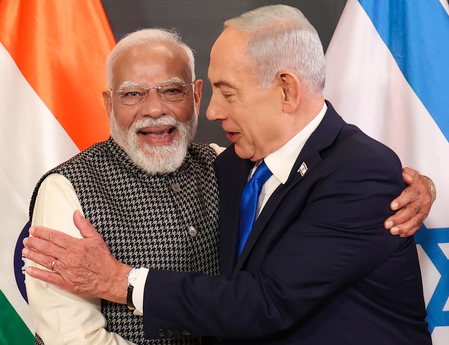
The Senate of Pakistan has passed a resolution condemning Israel’s Prime Minister Benjamin Netanyahu for his comments on forming alliances with India and other countries. This move indicates Islamabad’s unease over the situation. Prime Minister Narendra Modi is currently in Israel for a two-day visit, focusing on enhancing defense, trade, and security ties between the two nations. During this visit, India and Israel have signed a security MoU to collaborate on developing weapon systems in India.
The relationship between India and Israel was elevated to a strategic partnership level during PM Modi’s first visit to Israel in July 2017. The ongoing visit has further solidified the bond between the two countries. The strong rapport between PM Modi and PM Netanyahu has played a significant role in strengthening the ties between India and Israel. Experts suggest that Pakistan’s concerns and fears are justified given these recent developments.
The defense cooperation between India and Israel has a historical context, notably during the Kargil War in 1999. Indian Air Force’s Mirage-2000, equipped with Israeli technology, targeted intruders from Pakistan. Subsequently, in operations like ‘Operation Bandar’ and ‘Operation Sindoor,’ India utilized Israeli defense equipment effectively. The recent MoU to co-develop weapon systems in India has raised apprehensions in Pakistan, leading to the resolution against Netanyahu.
Pakistan’s reaction is seen as a response to the growing alignment between India and Israel, viewed as a potential threat to regional peace and global stability. The Pakistan media and public discourse have been abuzz with discussions on the India-Israel partnership, with some voices condemning the alliance as anti-Muslim and anti-Pakistan. The situation underscores the complex dynamics of geopolitics in the region, with implications for broader strategic realignments.
