


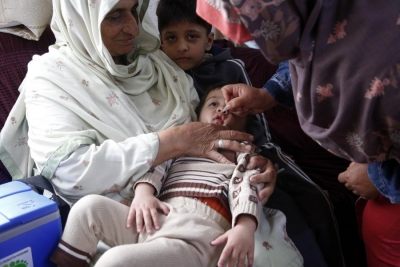
Pakistan has reduced the duration of its anti-polio campaign from seven to four days due to financial constraints and reduced payments to workers. The compensation for male and female polio workers, area in-charges, and union council medical officers has been significantly cut. Previously, polio workers received 13,000 Pakistani Rupees per campaign, but will now only get 7,000 Pakistani Rupees.
The area in-charges, who used to receive 19,000 Pakistani Rupees, will now be paid 9,216 Pakistani Rupees. Similarly, union council medical officers will see a decrease in their salary from 25,000 to 16,000 Pakistani Rupees per campaign. This reduction in compensation is a result of a shortage of funds faced by the health department amid a severe financial crisis.
Concerns have been raised about the possibility of further reductions, leading polio workers to protest against the wage cuts and demand the restoration of their previous compensation. Female polio workers have criticized the government for cutting the wages of poor daily-wage workers while maintaining its own extravagance. The Pakistani government plans to continue the wage cuts gradually.
A recent report revealed that claims of eradicating polio in Rawalpindi last year were false, as new samples showed a high presence of the polio virus in the city’s sewage. Refusal cases for polio drops have also increased significantly in Rawalpindi, including in affluent areas like Khayaban-e-Sir Syed and Satellite Town. To address this, health authorities have called for monthly anti-polio campaigns targeting families refusing polio drops. The next anti-polio campaign in Rawalpindi district is scheduled to start on February 2 and run until February 5.
