


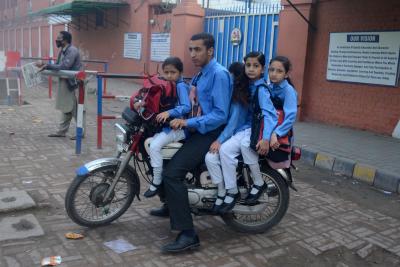
Two years after Pakistan declared a National Education Emergency, the country still faces a major challenge with over 25 million children out of school. Weak governance structures, insufficient funding, and provincial disparities are hindering progress in addressing the crisis, as highlighted in a comprehensive policy review. Despite planning efforts under the National Education Action Plan (NEAP) 2026, the gap between plans and implementation remains a significant issue.
Decades of neglect, rapid population growth, poverty, and low public investment have contributed to the education crisis in Pakistan, leading to a substantial number of children being excluded from the education system. The lack of adequate state infrastructure has allowed low-cost private schooling to thrive, exacerbating access inequalities over time.
The review conducted by the Civil Services Academy (CSA) analyzed the education systems in various provinces of Pakistan, revealing that millions of school-going children are still out of school. Punjab bears the largest educational burden, with a significant number of children out of school and a pressing need for additional classrooms. In Sindh, there is a marked collapse in continuity of studies beyond primary education, with a high number of out-of-school children, particularly girls.
Khyber Pakhtunkhwa faces challenges such as difficult terrain, security issues, and shortages of female teachers, contributing to a substantial number of children being out of school. Balochistan, despite improvements in out-of-school rates, continues to grapple with deep infrastructural gaps, making regular school attendance unfeasible in many areas. The report underscores the critical need for increased public investment in education to address the persistent crisis.
