


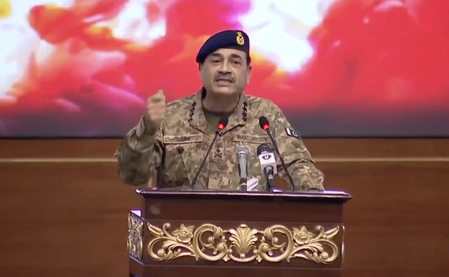
Pakistani Army Chief Asim Munir’s recent decision to declare war on Afghanistan has escalated tensions, leading to a crisis with no immediate resolution in sight. The airstrikes conducted by Pakistan across the Durand Line have added the Afghan Taliban to its list of adversaries, intensifying the situation. Despite the use of force, attacks on Pakistani military forces in Khyber Pakhtunkhwa and Balochistan continue unabated, creating a challenging scenario.
The move to declare war against Afghanistan has been criticized as ill-considered, further complicating Pakistan’s already delicate circumstances. The decision has been described as pushing the country into a difficult position from which it may struggle to extricate itself in the foreseeable future. The situation has been exacerbated by the lack of intervention to halt the conflict by US President Donald Trump, who has been accused of abandoning his role as a global peacemaker.
The refusal to intervene in the conflict has raised questions about Trump’s motivations, with speculations that the decision may be linked to Afghanistan’s rejection of handing over the Bagram air base to the US. The complexities of the situation are highlighted by the challenges of military intervention in a country with a history of resisting foreign influence. The report also questions the feasibility of expecting Afghanistan to surrender through military actions, drawing parallels with past conflicts that have defied easy resolution.
The report also touches on the dynamics of international relations, noting the complexities of alliances and power dynamics at play. The article highlights the delicate balance of condemning aggressive actions while maintaining diplomatic relationships. The situation underscores the challenges of navigating geopolitical tensions while upholding national interests and international obligations.
