


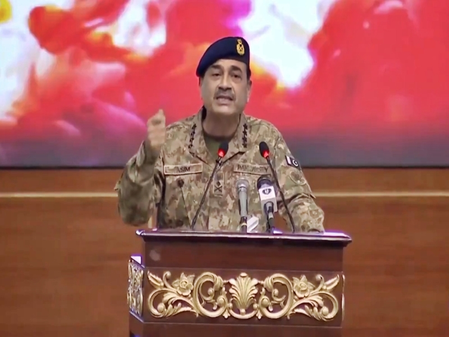
The Pakistani military regime led by Asim Munir has encountered significant challenges in consolidating power domestically over the past three years. Employing a “hard state” strategy, the regime relies on a militarized framework emphasizing political repression and constitutional changes to centralize control and limit political opposition. This approach has led to a notable increase in the number of political prisoners, including former Prime Minister Imran Khan and members of his Pakistan Tehreek-e-Insaf (PTI) party.
The government’s tactics involve criminalizing public gatherings and assemblies, particularly in Islamabad, to suppress dissent and weaken political opposition. While these measures have reduced confrontational politics in Punjab, Imran Khan maintains widespread popularity despite being incarcerated. Despite efforts to control online activity through internet restrictions and the Pakistan Electronic Crimes Act (PECA), dissenting voices persist in the digital realm.
The regime’s crackdown extends beyond political hubs, targeting social movement organizations advocating for ethnic minority rights. Leaders such as Ali Wazir of the Pashtun Tahaffuz Movement and Mahrang Baloch from the Baloch Yakjehti Committee have faced imprisonment and censorship for their activism. Additionally, the Pakistani authorities have escalated deportations of Afghan refugees, with over 146,000 Afghans forcibly returned this year, as reported by Human Rights Watch.
The report highlights a broader trend of authoritarianism globally, indicating limited external scrutiny on Pakistan’s democratic and legal regression. The Munir regime appears focused on leveraging its international standing to strengthen domestic control and legitimacy amid ongoing repression and human rights abuses.
