


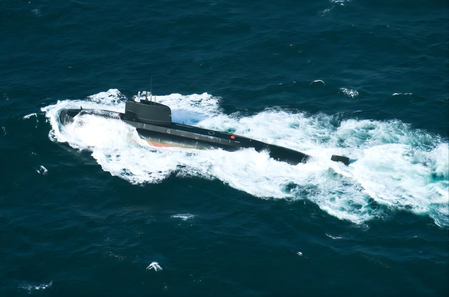
Pakistan’s advanced diesel-electric attack submarine, PNS Hangor, constructed by China, recently visited Colombo in Sri Lanka after being inducted into the Pakistan Navy in Karachi. The submarine, equipped with stealth features, is part of a series of eight submarines jointly built by China and Pakistan. Notably, PNS Hangor boasts an Air-Independent Propulsion (AIP) system, allowing it to stay submerged for extended periods without surfacing.
BNS Pekua, a cutting-edge naval base developed by China for Bangladesh near Cox’s Bazar, can house up to eight surface vessels and six submarines. With Bangladesh currently owning only two submarines, the base is expected to host Chinese and friendly nations’ vessels. The strategic location of BNS Pekua, approximately 1,000 km from the Andaman and Nicobar Islands and equidistant from Visakhapatnam, raises concerns for India regarding Chinese and Pakistani naval presence.
The development of BNS Pekua has sparked worries in India, as it could serve as a logistics hub for Chinese and Pakistani submarines, potentially impacting regional security dynamics. The base’s dry dock facilities are tailored for submarines like the Chinese Type 039A/039B, aligning with the export variant represented by PNS Hangor. This situation may necessitate India to enhance surveillance efforts, given the proximity of the base to critical naval installations.
India’s response to the evolving maritime scenario includes deploying anti-submarine warfare corvettes, shallow water crafts, and long-range surveillance aircraft to monitor submarine activities in the Bay of Bengal. Despite these measures, the presence of Chinese and Pakistani submarines near its maritime borders poses a significant challenge for the Indian Navy, requiring a strategic reassessment of its surveillance and defense capabilities.
