


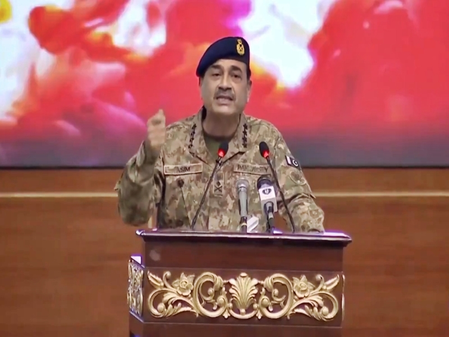
Pakistan’s civilian government is facing increased military influence, especially with Army Chief Asim Munir playing a key role in US-Iran mediation efforts. Munir’s involvement highlights Rawalpindi’s control over foreign policy, sparking worries about democratic stability.
Munir, recognized as a crucial figure in the negotiations, has been instrumental in facilitating communication between the US and Iran. The army chief’s significant position in the talks has shifted the focus from Islamabad to Rawalpindi, the military headquarters.
Former Pakistani diplomat Maleeha Lodhi emphasized Munir’s pivotal role, stating that the army chief’s influence is indispensable for the success of the discussions. She noted that the foreign ministry plays a secondary role compared to Munir’s involvement.
Reports have highlighted Munir’s historic meeting with US President Donald Trump in 2025, showcasing his growing influence in diplomatic circles. President Trump’s preference for engaging with Munir over the Prime Minister in mediation efforts underscores the army chief’s prominence in back-channel diplomacy.
The consolidation of military power in Pakistan, exemplified by the 27th Constitutional Amendment, has raised concerns about civilian governance. This structural shift has granted extensive authority to military leaders like Munir, leading to fears of diminished civilian oversight and increased military influence.
Prime Minister Shehbaz Sharif has acknowledged Munir’s significant contributions to the US-Iran mediation process, highlighting the army chief’s crucial role in facilitating communication between the two nations. Munir’s recent visit to Tehran with a delegation further underscores his pivotal position in advancing diplomatic efforts.
