


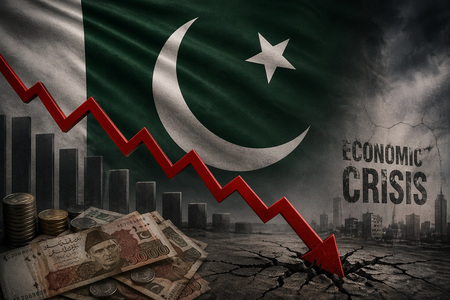
Pakistan’s central government debt has surged to a record Rs 81.93 trillion, with a notable increase of Rs 1.4 trillion in April alone. This rise underscores the growing fiscal pressures and the country’s reliance on borrowing to fund its expenses. The latest figures reveal deep-rooted weaknesses in Pakistan’s public finances, despite concerns about fiscal sustainability and escalating debt levels.
The report indicates that the central government debt has surged by over Rs 4 trillion in the first 10 months of the current fiscal year. Of this increase, domestic debt constitutes more than Rs 3.6 trillion, while external debt has risen by over Rs 400 billion. The substantial spike in April was fueled by both domestic and foreign borrowing, emphasizing the government’s persistent dependence on debt to cover fiscal gaps and meet repayment commitments.
It is highlighted in the report that successive Pakistani governments have increasingly resorted to borrowing to finance ongoing expenses and debt repayments, perpetuating a challenging cycle. Despite numerous warnings from economists, international financial bodies, and policymakers regarding weak revenue collection and enduring fiscal deficits, the country’s debt burden continues to escalate.
The mounting debt carries significant economic implications, as a larger portion of public resources is directed towards debt repayment rather than vital sectors like education, healthcare, infrastructure, and social welfare. Additionally, the report cautions that geopolitical tensions in West Asia have introduced fresh uncertainties, impacting global energy markets and Pakistan’s external accounts due to elevated oil import expenses.
To address these challenges, Pakistan necessitates enhanced revenue generation, stricter expenditure control, and sustained structural reforms to steer public finances towards a more sustainable trajectory. Failure to tackle the root causes of escalating borrowing could expose the country to more severe fiscal hurdles in the future.
