


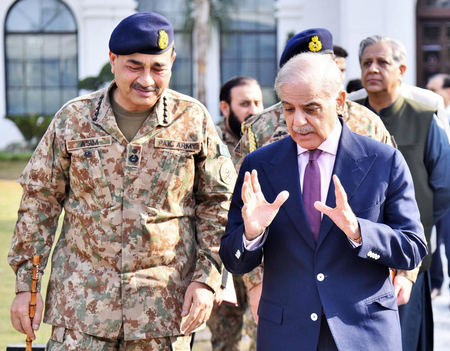
Pakistan, under Army Chief Asim Munir’s leadership, is engaging in what is being termed as “drama diplomacy” in response to the failed initial talks between the US and Iran. This move is seen as an attempt to salvage its reputation amidst the shifting dynamics in the Gulf region.
The second round of talks, spearheaded by Pakistan, is facing challenges as Iran shows reluctance to engage further with the US. Despite Pakistan’s efforts to position itself as a significant player in Gulf conflict resolution, the overall strategic landscape indicates that conflicting interests and coercion are hindering peace efforts in the region.
The United States is resorting to coercive measures and a show of strength in the Strait of Hormuz to compel Iran back to the negotiating table. However, the report highlights that the lack of power balance and flexibility on both sides is prolonging the negotiation process, turning it into a complex diplomatic dilemma.
In the midst of these high-stakes negotiations, Asim Munir’s credibility is on the line, with Pakistan’s diplomatic influence in the Gulf at risk. The report underscores the importance of face-saving for Pakistan to avoid further credibility damage and to maintain its diplomatic ties in the region.
