


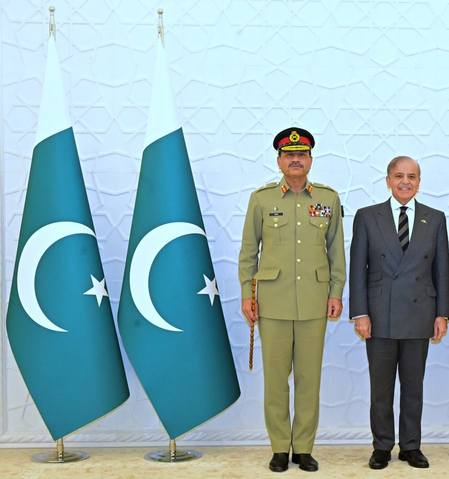
Pakistan is facing severe economic crisis, political instability, and militant violence at home, making it difficult to pursue a foreign policy driven by the ambitions of its security establishment. A recent report highlighted how Pakistan’s Prime Minister and senior cabinet members met with UAE President Sheikh Mohammed bin Zayed while Saudi Arabia carried out strikes against Emirati-linked weapons shipments.
The report pointed out that Pakistan’s foreign policy, dominated by the military, often leads to the country being entangled in conflicts beyond its control. With shifting alliances and expectations from various global and regional powers, Pakistan finds itself in a delicate position where loyalty to allies may conflict.
The proposition of deploying Pakistani troops to the Palestinian region, as requested by US President Donald Trump, poses challenges for Islamabad. Participating in a security or stabilization force in Gaza could alienate domestic sentiment and damage Pakistan’s standing in the Muslim world, given the complexities of the Israeli-Palestinian conflict.
Additionally, Pakistan’s recent defense deal with Khalifa Haftar in Libya, despite international sanctions and political divisions in the country, reflects a strategic overextension with potential diplomatic repercussions. By aligning with Haftar, Pakistan risks straining its relationships with other key players in the region, such as Saudi Arabia and the UAE.
The report concludes that Pakistan’s pursuit of visibility and influence through such strategic moves may backfire, leaving the country vulnerable to external pressures and compromises. In a region marked by complex rivalries and power dynamics, Pakistan’s foreign policy choices could potentially reduce its role to that of a pawn rather than a mediator.
