


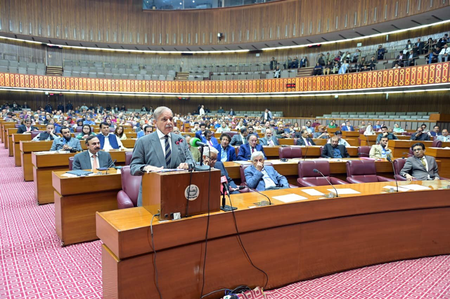
Pakistan’s federal budget for Fiscal Year 2026-27 has increased defense spending by 18% to three trillion Pakistani Rupees, favoring military expenses over public welfare. This move has been highlighted as a significant allocation towards defense, overshadowing investments in human resources crucial for economic growth. The budget shows a stark contrast, with minimal allocations for higher education, primary schooling, and healthcare compared to the substantial defense budget.
In recent years, Pakistan has witnessed a notable rise in poverty levels, as reported by the Pakistan Economic Survey 2025-26. The national poverty headcount ratio surged to 28.9% in FY2024-25 from 21.9% in FY2018-19, leading to approximately 27 million more people falling into poverty, totaling around 70 million individuals. Both rural and urban poverty rates have seen a significant increase, emphasizing the worsening economic conditions.
A considerable portion of the budget has been allocated to debt servicing, leaving limited room for social expenditure and asset creation. Debt servicing has been granted a substantial share of around 8.054 trillion rupees, alongside defense, comprising over 60% of the total federal outlay. This allocation pattern restricts spending on social protection, education, health, infrastructure, and development.
The defense budget, which is nearly three times the federal development budget, and the significant allocation to debt servicing have led to constrained resources for social protection, education, health, and other critical sectors. Despite a slight increase in social protection spending, the overall allocation for sectors that enhance human capability remains inadequate. The budget reflects a taxing approach on salaried individuals and formal businesses to boost defense spending, while basic needs like health, education, and employment remain unaddressed.
