


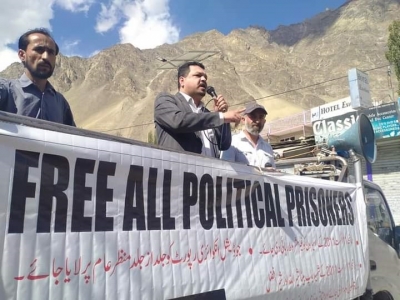
Pakistan-administered Gilgit-Baltistan (PoGB) has been without local bodies for twenty years, leading to significant civic challenges and developmental setbacks. The region’s public health system suffers from neglect, lacking essential facilities, equipment, and medical staff. Residents often have to seek medical treatment outside the region, straining their finances due to inadequate healthcare services, electricity, clean water, and sanitation.
Sajjad Ahmad, an Assistant Professor at Karachi’s IBA, highlighted the scarcity of basic amenities in PoGB despite facing numerous challenges and a limited budget. The decision to create more districts in areas with populations under 50,000 has further strained the region’s financial resources, with a disproportionate focus on salaries rather than development spending. Recent floods in Ghizer, Ghanche, Skardu, and other areas have exacerbated residents’ hardships, leaving many without livelihoods.
In the past five years, PoGB has witnessed mass demonstrations and sit-ins protesting governance issues, particularly against Pakistan’s proposed removal of wheat subsidies and imposition of taxes. Criticism has been directed at the PoGB Land Reforms Act of 2025 and the arrests of leaders opposing local authorities’ decisions. The region faced unrest in 2025, including a prolonged sit-in at the Sost dry port by traders and businessmen opposing federal taxes on imports for local consumption.
Escalating tensions in PoGB led to police protests over delayed allowances and benefits, resulting in suspensions and salary halts for law enforcement officers. The regional administration’s handling of grievances further strained relations between police personnel and authorities, culminating in unrest and protests outside the regional authority’s residence in mid-August.
