


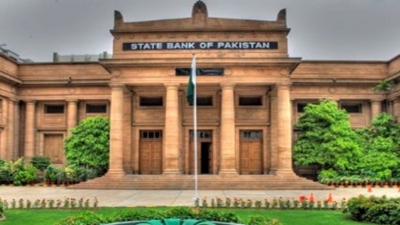
State Bank of Pakistan Governor Jameel Ahmad has cautioned that Pakistan’s growth model is deemed “unsustainable” for a population of 250 million. The warning comes amidst shrinking business cycles in the country, with each recovery showing a weakening trend, as per a report by European Times. Pakistan is currently grappling with soaring poverty, historic unemployment, and a prolonged phase of stabilization that has severely impacted households and businesses.
The report highlights that Pakistan has been experiencing a series of “corrections,” marked by burdensome taxation, high energy tariffs, and significant cuts that disproportionately affect ordinary citizens. Despite repeated rounds of stabilization, the cushion for households and industries continues to diminish, while underlying structural issues persist unaddressed.
Described as a structural decline against a backdrop of prolonged economic stagnation, Pakistan’s growth has steadily declined from an average of 3.9% over three decades to just 3.4% in the last five years. The report underscores that Pakistan’s economic framework, reliant on consumption spurts, cyclical borrowing, and temporary stabilization measures, is inadequate to meet the demands of its 250 million citizens.
According to the European media house, Pakistan’s economic narrative follows a familiar pattern each year, characterized by reserve depletion, inflation escalation, currency devaluation, and seeking IMF intervention for rescue packages. This cycle is typically followed by stabilization efforts, leading to a collapse in growth, a surge in poverty rates, and a recurring crisis cycle.
Unemployment in Pakistan has surged to a 21-year high of 7.1%, leaving millions without job opportunities in an economy struggling to create new avenues. World Bank data indicates a sharp rise in poverty to 44.7% in the country, reflecting the challenging economic landscape.
