


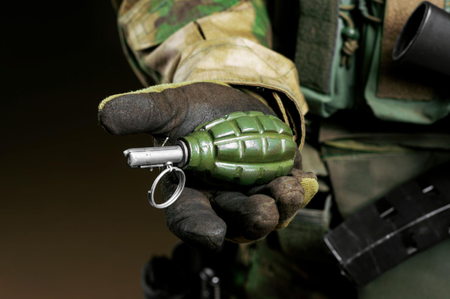
Intelligence agencies have noted a change in strategy by Pakistan’s Inter-Services Intelligence (ISI), which now relies on cost-effective, high-impact terror modules operating in India. Investigations reveal a shift towards using solar-powered cameras for reconnaissance and grenades as the weapon of choice, moving away from complex operations involving improvised explosive devices (IEDs).
Recruitment methods have also evolved, with a shift from religious-based recruitment driven by Islamic radicalization to monetary incentives. Recent busts have exposed individuals who were enticed into these modules with money rather than through radicalization. The ISI aims to minimize investments to reduce financial trails and detection by investigating agencies.
In a recent operation by the Delhi police, recruits were apprehended for planning attacks on sensitive locations using grenades. The ease of operation and lower risk associated with grenades compared to timer bombs make them a preferred choice for these modules targeting crowded and sensitive areas.
While grenades may have a smaller impact than bombs, they offer a safer and more cost-effective option for these terror modules. The goal appears to be to target military installations to embarrass the Indian armed forces. The ISI’s focus on hitting military installations intensified after Operation Sindoor, aiming to undermine the Indian military.
The ISI’s planned operation involved strategically placing solar-powered cameras across multiple states, including Rajasthan, Punjab, Haryana, and Jammu and Kashmir. The recruits were organized into separate groups to prevent information leaks, highlighting the meticulous planning by the ISI to avoid detection.
Efforts against these modules will continue nationwide, with a focus on crowded areas like railway stations and locations with a high concentration of military installations. The authorities remain vigilant to counter these threats and prevent potential attacks.
