


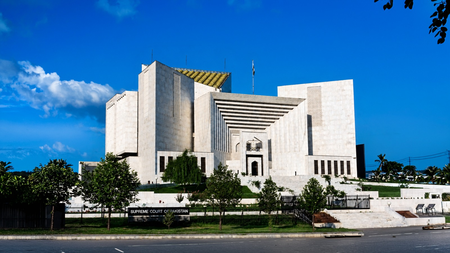
Pakistan’s judiciary has been criticized for being manipulated as a tool of the state rather than upholding justice, according to a report by an international human rights NGO. With a staggering 2.4 million pending cases across the country, Pakistan ranks poorly in both criminal and civil justice on the World Justice Project’s Rule of Law Index.
The report highlighted that the backlog of cases in Pakistan is not just an inefficiency but a resource that can be exploited. It pointed out that hearing dates, criminal case filings, and evidence can be manipulated for personal gain, raising concerns about the fairness of the legal system.
The article also discussed constitutional changes in Pakistan that have eroded the independence of the Judiciary. Amendments in 2024 and 2025 allowed Members of Parliament to influence judge selection, granted powers to remove judges based on vague reasons, and established a Federal Constitutional Court with ties to the Prime Minister.
Furthermore, the report shed light on the alarming conviction rates in blasphemy cases, where individuals from marginalized communities face overwhelming odds in court. Anti-corruption bodies like the National Accountability Bureau and the Supreme Judicial Council were also criticized for being used selectively to target critics rather than upholding justice.
